6 min read
Laminate vs Hardwood Flooring: Which Is Right for Your Property?
An educational comparison of laminate, solid hardwood, and engineered wood flooring covering durability, maintenance, moisture, and suitability for different households.
- Written by
- Papstore Limited
- Published
- Updated
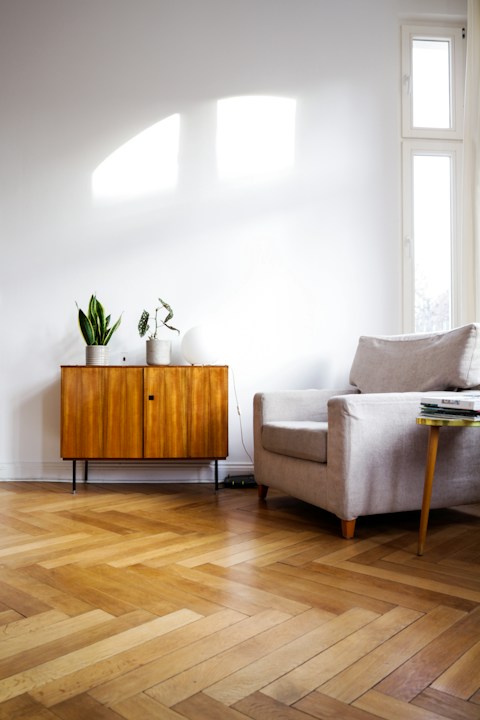
Laminate and hardwood both aim to put a timber look on your floor, but they achieve it in fundamentally different ways. Laminate is a printed product designed to resemble wood. Hardwood, whether solid or engineered, contains real timber. The right choice depends on budget, lifestyle, room conditions, and how much maintenance you are prepared to carry out over the years. This guide covers the key differences so you can make an informed decision.
What laminate flooring is
Laminate flooring has a layered construction. The top layer is a photographic image of timber (or stone) sealed beneath a clear protective overlay. Beneath the image layer sits a dense fibreboard core, and underneath that a stabilising backing layer. Modern laminate can look convincingly like real wood from a standing distance, but close inspection usually reveals the printed pattern. Laminate is fitted as a floating floor, clicking together over the subfloor with an underlay beneath.
What hardwood flooring includes
Hardwood flooring divides into two main categories. Solid wood boards are milled from a single piece of timber throughout their thickness. Engineered wood boards have a real timber top layer bonded to a plywood or composite base. Both types offer the warmth and character of genuine wood grain, and both can be sanded and refinished at least once during their lifetime, though solid wood allows more refinishing cycles because the usable timber runs deeper.
Appearance and character
Real wood develops a patina over time. Knots, grain variation, and tonal changes give hardwood floors individuality that printed laminate cannot fully replicate. Laminate offers consistency, which some homeowners prefer: every plank matches the design specification closely. If you value a floor that evolves with the home, hardwood has the advantage. If uniform appearance matters more, laminate delivers that predictability.
Durability and everyday wear
- Laminate resists surface scratches well thanks to its hard overlay, but deep damage cannot be repaired
- Solid wood scratches more easily but can be sanded back and refinished to restore the surface
- Engineered wood offers similar refinishing potential, though the thinner top layer limits how many times this can be done
- Heavy furniture can dent real wood, while laminate may chip at edges if struck sharply
- Neither material is immune to wear; both need appropriate care in high-traffic zones
Moisture tolerance
Moisture is the most common cause of failure for both laminate and hardwood, though for different reasons. Laminate cores swell if water reaches them through joints or damaged edges. Solid wood can warp, cup, or expand when humidity changes significantly. Engineered wood handles moisture better than solid timber because its layered base resists expansion and contraction more evenly. None of these products is recommended for rooms with regular standing water, such as bathrooms with showers.
Maintenance expectations
Laminate is relatively low-maintenance. Regular sweeping and occasional damp mopping keeps it clean. Avoid soaking the floor or using abrasive cleaners. Hardwood floors need a little more attention: specific cleaning products suited to the finish, prompt spill treatment, and periodic re-oiling or re-lacquering depending on the surface treatment. The reward is a floor that can be refreshed rather than replaced when it starts to look tired.
Cost considerations
Laminate is generally less expensive per square metre than hardwood, particularly solid timber. Engineered wood sits in between, offering real wood character at a lower entry point than solid boards. Installation costs also differ: floating laminate can be quicker to lay, while hardwood may need adhesive application or secret nailing depending on the product and subfloor. The long-term calculation should include lifespan and the ability to refinish. A well-maintained hardwood floor can last for decades and be sanded back when it looks tired, while laminate has a fixed surface life and must be fully replaced once the wear layer is compromised.
Underfloor heating
Engineered wood is usually more compatible with underfloor heating than solid timber because its layered construction minimises movement as temperatures change. Many laminate products are also suitable, subject to the manufacturer's maximum temperature limits. Solid wood can work but requires careful specification and slower heating profiles to avoid excessive expansion and contraction.
Sound and acoustics
Hard floors transmit more impact noise than carpet. Laminate on a concrete subfloor with thin underlay can sound hollow and amplify footsteps, which is a common complaint in flats and terraced houses. Hardwood, particularly solid boards fixed to battens, can also transmit noise, though the mass of the timber helps somewhat. Engineered wood over a quality acoustic underlay performs better for sound reduction. If you live in a property where noise transfer between floors matters, factor acoustic performance into the product and underlay specification rather than leaving it as an afterthought.
Which suits your property?
- Choose laminate if you want an affordable wood look with simple maintenance and can accept replacing it after several years
- Choose engineered wood if you want real timber character with better stability than solid boards and compatibility with underfloor heating
- Choose solid wood if you want the most authentic material and are prepared to invest in its ongoing care
- Avoid all three in genuinely wet rooms; consider vinyl or LVT for kitchens and bathrooms where moisture is a daily factor
Understanding the differences between laminate and hardwood helps you set a realistic budget and maintenance plan. If you are also considering alternatives such as LVT, which replicates the timber look with stronger water resistance, or if your project involves replacing existing flooring before new material goes down, Papstore Limited can advise on the options that fit your property and lifestyle.