7 min read
How to Choose the Right Laminate Flooring for Your Living Room
An educational guide to choosing laminate flooring for living rooms, covering AC ratings, thickness, design options, underlayment, click-lock systems, and what to look for before buying.
- Written by
- Papstore Limited
- Published
- Updated
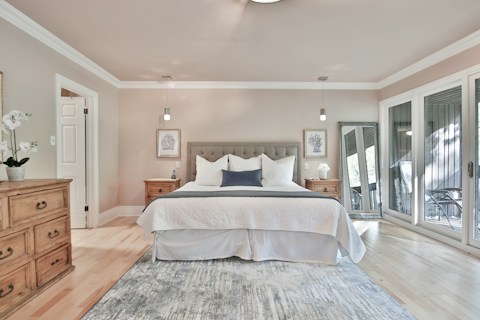
Laminate flooring has earned its place as a popular choice for living rooms across the UK, offering a wood-look finish at a fraction of the cost of solid timber. Modern laminate products have improved significantly in design realism, durability, and ease of installation. If you are considering laminate for your living room, understanding the key specifications and features helps you choose a product that looks right and performs well for your household.
What laminate flooring is made of
Laminate is a multi-layer product. The core is typically high-density fibreboard (HDF), which provides structural rigidity. Below the core is a stabilising backing layer that helps resist moisture from the subfloor. Above the core sits a photographic design layer, which carries the wood, stone, or tile image, and on top of that is a clear melamine resin wear layer that protects the surface from scratches, scuffs, and fading. This layered construction is what distinguishes laminate from both real wood and vinyl flooring.
AC ratings: what they mean
Laminate flooring is graded using the AC rating system, which measures resistance to abrasion, impact, staining, and other wear factors. The scale runs from AC1 to AC5, with higher numbers indicating greater durability.
- AC1: light residential use, such as bedrooms with minimal foot traffic.
- AC2: general residential use, suitable for rooms with moderate daily traffic.
- AC3: heavy residential or light commercial use. This is the minimum recommended rating for a living room that sees regular family use.
- AC4: general commercial use. Suitable for busy living rooms, hallways, and open-plan areas in active households.
- AC5: heavy commercial use. Rarely needed in domestic settings but indicates maximum durability.
For a living room that serves as the main family gathering space, AC3 is the starting point. If the living room also functions as a playroom, home office, or through route to the kitchen, AC4 provides extra insurance against wear.
Thickness and its effect on feel
Laminate flooring typically ranges from 6 mm to 12 mm in thickness. Thicker boards feel more solid underfoot, produce less of a hollow sound when walked on, and are generally better at bridging minor subfloor irregularities. For a living room, 8 mm is a reasonable minimum. Products of 10 mm or above offer a more premium underfoot feel and tend to have better click-lock connections that hold tightly over time.
Design realism and finish options
Early laminate floors were easy to spot as imitations. Modern products are far more convincing. High-definition printing reproduces wood grain detail with impressive accuracy, and embossed-in-register (EIR) technology aligns the surface texture with the printed grain so that the ridges you feel match the pattern you see. This tactile realism makes a significant difference to how the floor looks at close range.
Design options include oak, walnut, ash, pine, and grey-washed finishes in various plank widths. Wider planks, typically 190 mm or above, create a more contemporary, spacious feel. Narrower planks suit traditional or cottage-style interiors. Some ranges also offer herringbone and chevron layouts that replicate parquet patterns.
Click-lock installation systems
Most modern laminate uses a click-lock system where planks snap together along the long and short edges without adhesive. The floor floats over the subfloor, expanding and contracting slightly with temperature and humidity changes. This floating installation method means laminate can often be laid over existing hard flooring, provided the surface is flat and stable. An expansion gap around the perimeter, hidden by skirting or beading, is essential to allow this natural movement without buckling.
The role of underlayment
Underlayment sits between the laminate and the subfloor. It serves several purposes: it smooths out minor subfloor imperfections, reduces the hollow sound of footsteps, provides a small amount of thermal insulation, and can include a moisture barrier for concrete subfloors. Some laminate products come with underlayment pre-attached; for those that do not, purchasing a separate underlayment is strongly recommended. Using the wrong type, or skipping it entirely, can result in a noisy, unstable floor.
Noise and comfort underfoot
One common concern with laminate is the hollow, tapping sound it can produce underfoot. This is primarily a function of the underlayment and subfloor quality rather than the laminate itself. A good-quality underlayment with acoustic properties significantly reduces this effect. Thicker boards also help: a 10 mm or 12 mm laminate transmits less impact noise than a 7 mm product. If the living room is above another occupied room, acoustic performance is worth factoring into your decision.
Moisture considerations in a living room
Standard laminate is not waterproof. The HDF core absorbs moisture, which can cause swelling and permanent damage if water sits on the surface or seeps through joints. In a living room, this is less of a concern than in a kitchen or bathroom, but spills should still be wiped up promptly. If your living room connects to a kitchen in an open-plan layout, consider whether a water-resistant laminate or an alternative flooring type might be more appropriate for the transition zone.
What to check before buying
- Confirm the AC rating meets the demands of your living room.
- Check the board thickness and whether underlayment is included or separate.
- Order a sample and view it in your room under natural and artificial light.
- Read the manufacturer's guidance on subfloor requirements, expansion gaps, and underfloor heating compatibility.
- Compare the warranty terms, particularly what is covered for domestic use versus commercial settings.
Laminate flooring can deliver an attractive, practical living room floor when the specification matches the room's demands. If you are exploring your options and want to compare laminate with alternatives such as LVT or vinyl, Papstore Limited can help you understand how each product type performs and which best suits your living space and lifestyle.